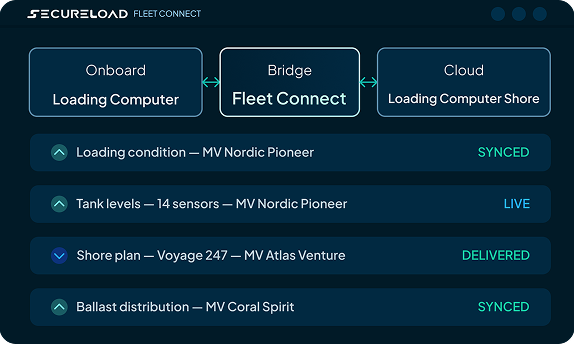
Fleet Connect synchronizes loading conditions, live sensor data and loading plans between the onboard Loading Computer and the cloud. Shore teams see what the crew has loaded. The crew receives what the office has planned. One continuous data flow no manual re entry, no file incompatibilities, no blind spots.
The Problem
The office spends days planning the optimal loading condition stability, trim, cargo distribution, everything checked. But the onboard loading computer cannot read the file. The crew starts from scratch, creates their own plan and the office’s work is wasted. In the worst case, the crew’s plan puts the vessel at risk.
Once the vessel leaves port, the office has no idea what the actual loading condition looks like. Was the plan followed? Did the crew make changes? Are the stability margins safe? Without a live connection, the shore team is flying blind until the next manual report arrives if it arrives at all.
The vessel has tank level sensors, draft readings and ballast data but all of it lives on the bridge. Shore teams cannot access real-time readings. Any monitoring requires manual reporting by the crew, which is delayed, incomplete and prone to error.
When something goes wrong, there is no record of what was planned versus what was executed. No timestamp of when conditions changed. Investigations rely on memory and email threads rather than structured, verifiable data.
The Solution
Fleet Connect turns the onboard Loading Computer into a connected system. Loading conditions, sensor readings and loading plans flow between the vessel and the cloud automatically. The office sees exactly what the crew has loaded. The crew receives exactly what the office has planned in a format the onboard system reads natively.
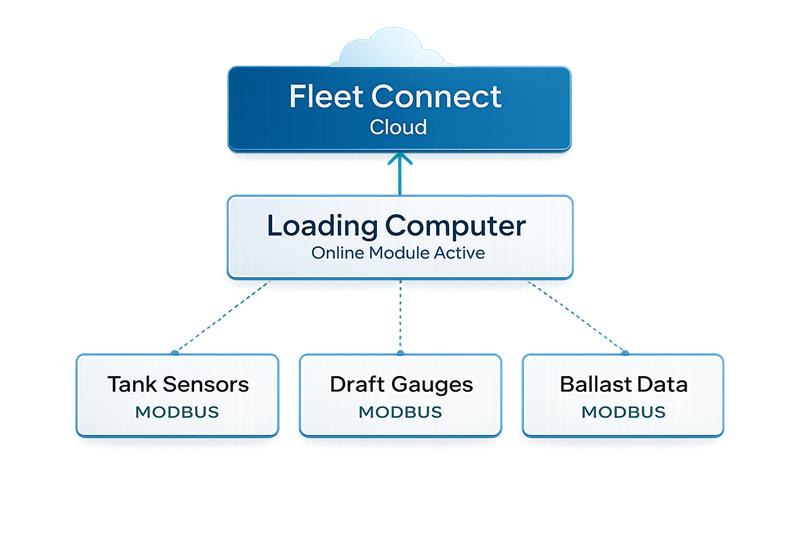
With the Online module, tank level sensors and draft gauges feed real-time data into the Loading Computer. Fleet Connect picks up that data and transmits it to the cloud whenever internet is available.
One data flow. Shore and vessel. Always in sync.
What Flows
Current loading condition from the onboard LC cargo, ballast, stability results, trim and drafts synced to the cloud so the shore team always sees the real state of the vessel.
Real-time tank levels, draft readings and ballast data from onboard sensors via the Online module. Transmitted to the cloud whenever connectivity is available.
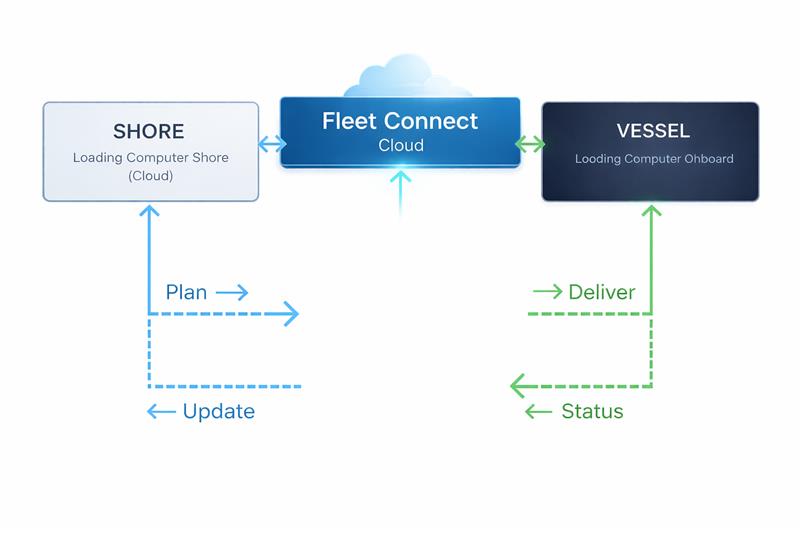
Loading plans created in Loading Computer Shore are delivered directly to the onboard system in native format ready for the crew to review and execute without re-entry.
All vessel to cloud communication is protected from tampering and eavesdropping. Fleet Connect is built to fully comply with BIMCO/ICS Cyber Guidelines and IMO MSC-FAL.1/Circ.3.
Under the Hood
Fleet Connect works with the Online module on the onboard Loading Computer. Tank level sensors and draft gauges are connected via standard Modbus communication. The Loading Computer reads live data from these sensors during cargo and ballast operations. Fleet Connect then picks up this data and transmits it to the cloud whenever internet connectivity is available on the vessel.
Loading plans created in Loading Computer Shore are delivered to the onboard system in native format no file conversion, no incompatibility. The crew opens the plan directly. Equally, conditions created or modified onboard sync back to the cloud, so the shore team always sees the current state. This eliminates the scenario where the office plans one thing and the crew executes another because the file format was not supported.
Requirements
Who It's For

See how every vessel in your fleet is loaded in real-time. Compare planned vs. actual conditions. Identify risks before they become incidents. Fleet Connect turns loading data from an after-the-fact report into a live operational feed.

Monitor loading conditions from the office without waiting for crew reports. Review sensor data, verify that shore plans were followed and intervene early if conditions deviate from what was planned.

Verify cargo loadability and plan feasibility from shore, then push the approved plan directly to the vessel. No more file format issues, no manual data entry by the crew, no ambiguity about which plan is current.

Receive loading plans from the shore office directly into the onboard Loading Computer in native format. No re-entry, no file conversion. Focus on execution rather than data management.

Deploy Fleet Connect on existing Loading Computer hardware with zero additional infrastructure. Secured tunnels and BIMCO-compliant cyber security throughout.

Access a complete audit trail of loading conditions, plan exchanges and sensor data with timestamps. Verifiable records for incident investigations, compliance reviews and operational audits.