SMM Hamburg 2026 marked an important step for SecureLoad.
For the first time, we were able to show much more of the SecureLoad ecosystem together, starting from the packing lists and cargo information arriving in the office, through stowage planning, and all the way to the loading condition onboard.
Over four days at Hall B6, Stand B6.136.1, we presented Stowage Planner Bulk, our stowage planning software for bulk cargo, Stowage Planner 3D, our stowage planning software for breakbulk, which made its public debut at SMM alongside our web-based, class-approved Ship Loading Computer.
Extending SecureLoad further into cargo planning
SecureLoad has spent years modernising one of the most established engineering tools onboard a vessel, the Loading Computer.
With Stowage Planner Bulk and Stowage Planner 3D, that same thinking now extends further upstream into cargo planning, where significant parts of the workflow are still manual, fragmented and dependent on specialist effort.
In many operations, the Loading Computer and stowage planning sit across separate tools, often from different vendors and built around separate vessel models.
That separation is exactly where much of the inefficiency begins. The handover between planning and loading remains manual, vessel information has to move between systems and a late cargo change can mean repeating work that has already been done once.
SecureLoad is built the other way round. One calculation engine, one vessel model, from the packing list through to the loading condition onboard.
Stowage Planner Bulk
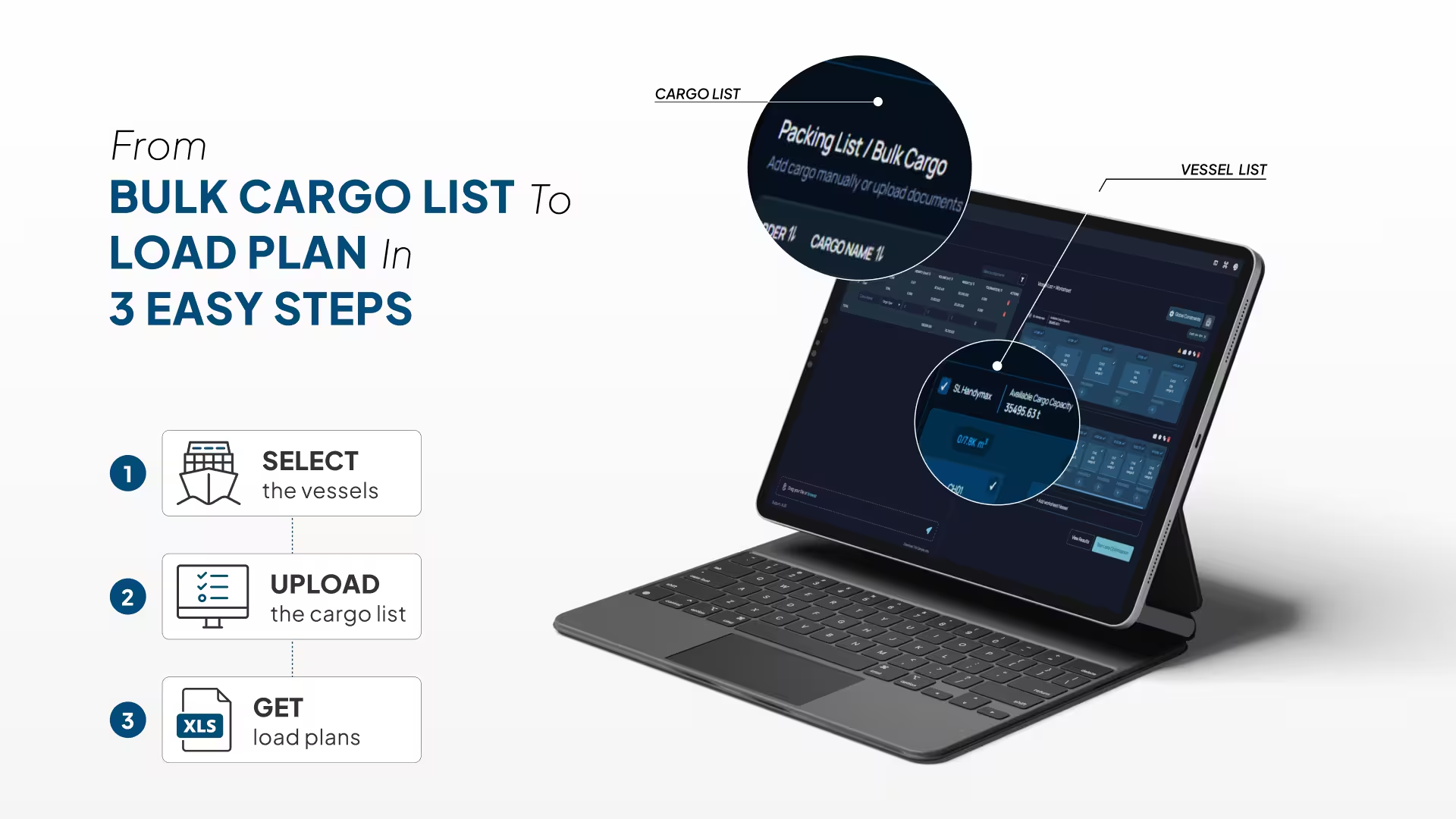
For bulk cargo, we demonstrated the core planning process in three simple actions.
- Upload the cargo list.
- Select the vessel.
- Generate the loading plan.
Behind that simple interaction, Stowage Planner Bulk can optimise cargo distribution and ballasting while verifying stability, longitudinal strength and draft requirements. It gives shore teams a faster way to move from a cargo enquiry to verified loading options without the repeated manual iterations that traditionally sit behind the process.
Stowage Planner 3D
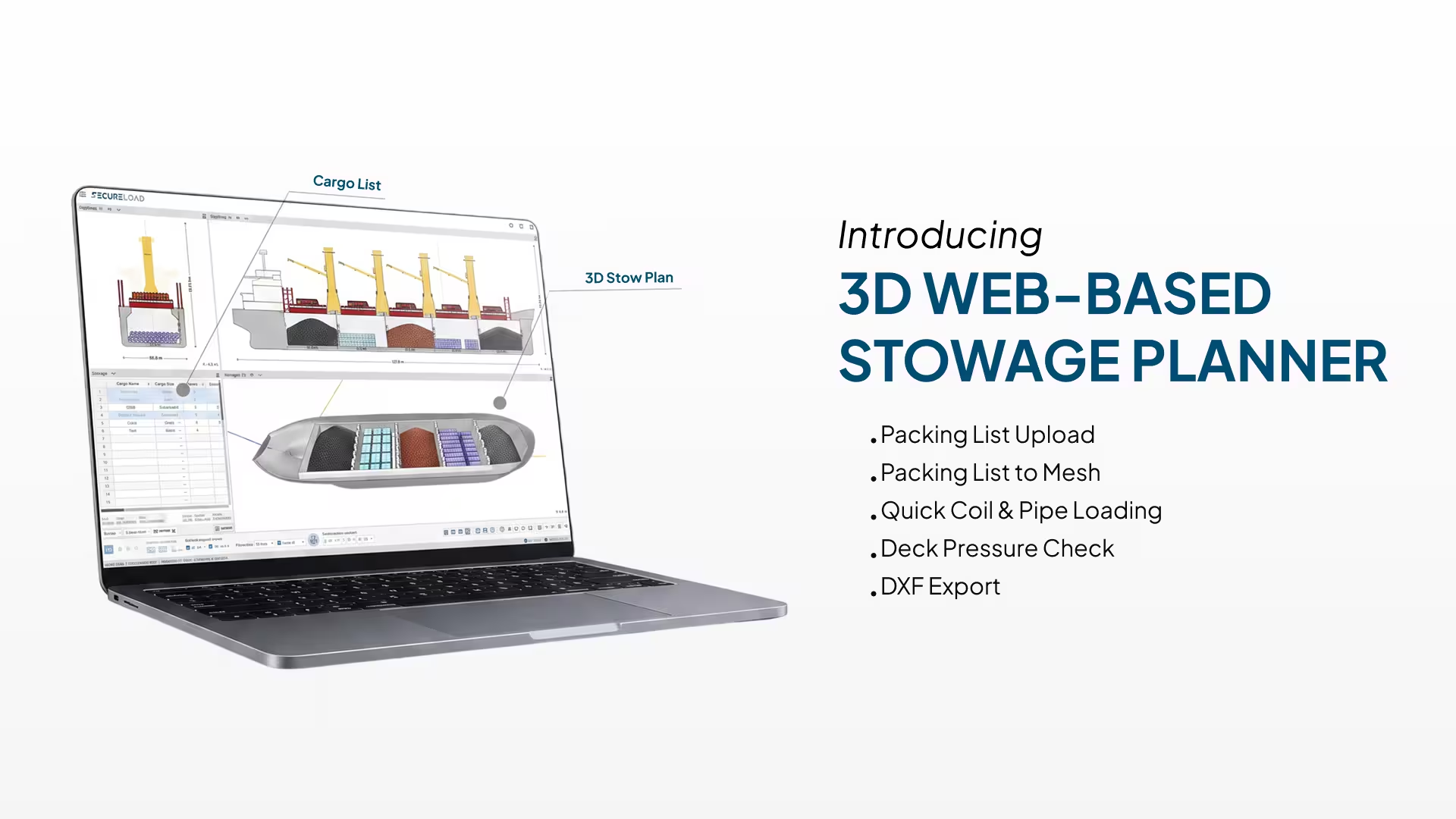
Stowage Planner 3D tackles a different planning challenge.
Breakbulk and project cargo planning depends heavily on how individual cargo units physically fit within the vessel. Steel coils, pipes and plates, machinery, vehicles and other project cargo all have different dimensions, shapes and handling requirements, and the plan has to work within the vessel’s actual geometry.
With Stowage Planner 3D, planners work directly on a 3D model of the vessel in the browser. Cargo can be created from packing-list dimensions using a simplified or bounding-box representation, while an actual 3D mesh can be used where one is available.
Instead of placing every unit one by one, planners can define how the cargo should be arranged, including spacing between units, the number of rows and tiers and specialist stacking rules for cargo such as coils. The system then helps build the arrangement around those constraints.
As cargo is placed, planners can assess how it fits within the available space and review engineering limits such as floor loads and point loads before finalizing the arrangement.
The completed stowage plan can then be saved into SecureLoad’s shore-based Loading Computer, where ballast and hydrostatic calculations can be carried out against the planned cargo condition. Once finalised, the approved loading condition can be transferred to the onboard Loading Computer for execution.
Starting with the packing list
At SMM, we also demonstrated how the journey can begin before stowage planning itself.
Packing lists and cargo lists arrive from different shippers, agents and customers in different formats, structures and languages.
CargoParse AI helps transform those incoming documents into structured, standardised and planning-ready cargo data in minutes.
That becomes the starting point for the appropriate stowage planning workflow, whether the operation requires Stowage Planner Bulk or Stowage Planner 3D.
From there, the completed plan can move through standard outputs into the operator's existing workflow. When SecureLoad's Loading Computer is also part of the vessel environment, the same ecosystem can continue through to onboard execution. And if the vessel is equipped with Hoppe Marine's control systems, the integration goes further, connecting SecureLoad's calculations with tank gauging and automated ballast execution onboard.
That was the journey we wanted to show at SMM.
From packing list to stowage plan to loading condition within one connected workflow.
What we heard at SMM
The strongest validation came from the people who work with these challenges every day.
Different visitors, in different conversations, came back to remarkably similar words.
“This is the future of cargo planning.”

Thank you to everyone who spent time with us at SMM.
Existing clients, partners, industry friends and many new contacts gave us generous amounts of their time, explored the products in depth and shared positive feedback on what we have been building.
Seeing experienced people in the industry recognise the problems immediately, respond so strongly to the solutions and share our excitement about where this can go was one of the most rewarding parts of SMM for our team.
A big thank you as well to our joint venture partner Hoppe Marine for being with us throughout the four days in Hamburg.
We came to SMM to show how SecureLoad is evolving into a more complete cargo planning and execution ecosystem.
We returned with even greater confidence in the road ahead.
Couldn’t meet us at SMM?
We would be happy to walk you through the SecureLoad ecosystem using cargo and vessel scenarios relevant to your operation.
Book a Demo

